
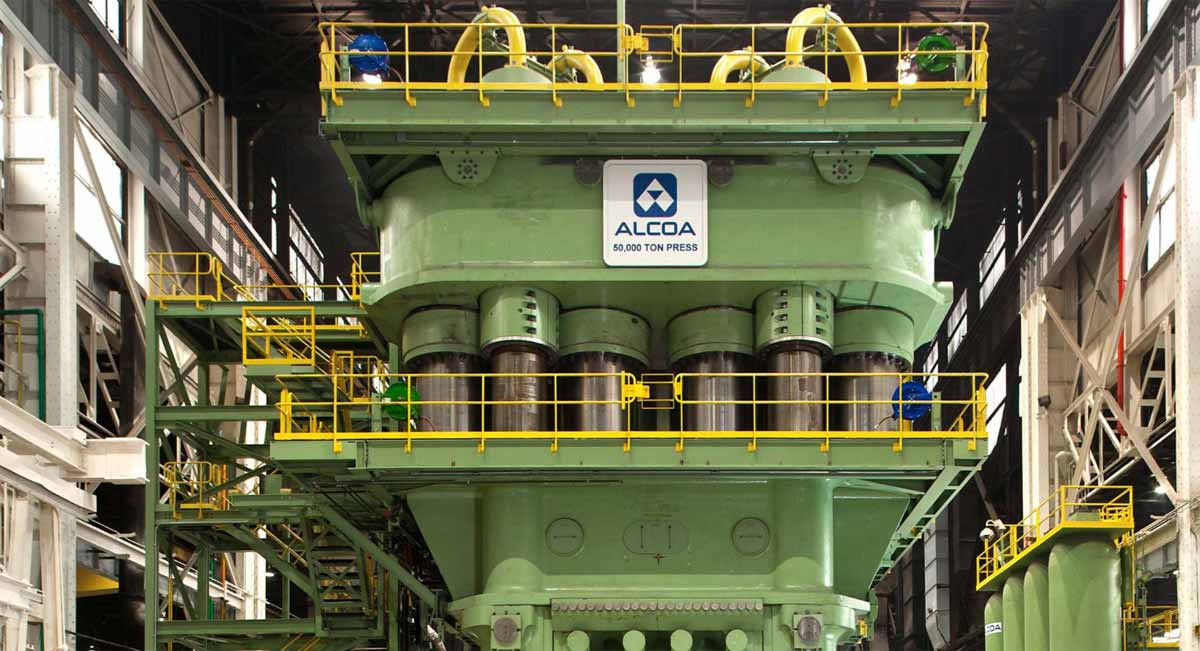
Industrial Engineering in Space 1: The 50,000-Ton Paradox
Space might seem all about natural sciences, heavy mechanics or electrical and electronics engineering… However, the history and the current status of space industry show that a sustainable, productive, efficient and successful space technology system emerges from careful management, assessments, risk predictions, planning and much more. This is where industrial engineers come into play.
This article series, Industrial Engineering in Space, will analyze and explain the space industry through the point of view of an industrial engineering student. Every chapter will introduce a different industrial aspect of space technologies and how industrial engineers contribute to that aspect of the industry.
Starting from their history, this article analyzes heavy forge presses by examining their benefits and how single-source restrictions, capacity planning, downtime and international relations shape the global space supply chain.
1. Hidden Parts of the Space Industry
In media, the only visible part of the space industry -which might also be named as the tip of the iceberg- is the glorified launches, landings, observations and spacewalks. For someone who is watching all these from their phone in their living room, it is hard to imagine the enormous scale of the machines that are being used.
All the rockets seem deceptively simple and easy to manage. Obviously, that is not the case for the real industry.
According to NASA, the Space Shuttle they manufactured as “the world’s first reusable spacecraft” has a full height of 184feet ≈ 56 meters [1]. This is approximately 32 times a human’s height.
Due to these immense dimensions—which few industries other than aerospace require—it is exceptionally hard to design and manufacture such a product.

Before starting to explain how these giant vehicles are produced, some technical terms will be introduced for the readers’ convenience.
Forging: Heating metal until it is soft enough to be shaped under extreme pressure or hammering [2].
Die Casting: A manufacturing process in which molten metal is injected under high pressure into a reusable steel mold (die) to produce complex shapes [3].
Bottleneck: A constraint or problem that delays a process, limits overall capacity, or stops production from continuing [2].
Burn-Through: A welding defect in which excessive heat melts completely through the base metal, leaving an unintended hole or cavity [3].
Monolithic Structure: A single-piece structural component manufactured as one solid unit rather than assembled from multiple smaller parts [5].
Lead Time: The total amount of time required for raw materials to pass through all manufacturing stages and become a finished product [4].
Changeover Time: The total time required to reconfigure a machine and swap tooling between the end of one production run and the start of the next [4].
2. Early Production of Spacecraft
As the words science journalist Sharon Begley wrote to reflect the famous astronomer Carl Sagan's curious spirit, states, "Somewhere, something incredible is waiting to be known" [6]. This notion is the starting point of space exploration: humans wishing to reach outside their world.
This ambition shaped the history of spacecraft. Production of aircraft had started earlier than the spacecraft. Therefore, the base for the space vehicles production was shaped by that era's aircraft production techniques.
The Soviet Union initiated the manufacturing process of space products [7]. However, it is surprising to say that the first product sent to space was not even near the dimensions of the Space Shuttle mentioned earlier.
Sputnik 1, the first artificial satellite to be launched from Earth, had dimensions similar to a beach ball and only weighed 83.6 kilograms [8].
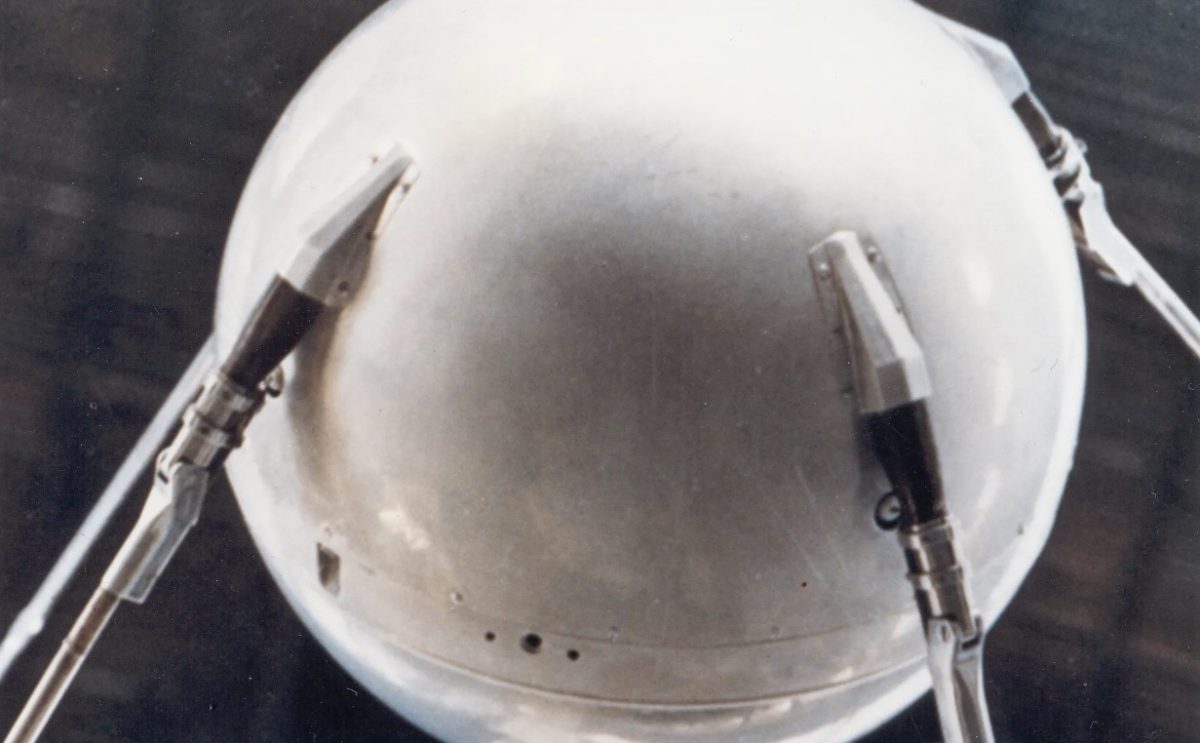
Even though the launch of such a small craft seems unimportant and negligible, this was the event that started the space race among nations up to this day [8].
A different country, working on a new technology that was not worked on earlier was not promising for other nations.
The American public was afraid that this might mean the Soviet Union was capable of "launching ballistic missiles that could carry nuclear weapons" [8].
Other than specific space productions, countries were producing their aircraft and rockets using certain methods.
At that time, these products were produced as a combination of small parts that were manufactured separately and then assembled.
Boris Chertok, who worked on the front lines of the Soviet rocket and space program, explains the early production steps of rockets and spacecraft in Germany, the Soviet Union, and the U.S. as follows: broadly speaking, learning to bend, form, and weld aluminum alloys was prioritized, and the process involved a large number of nonferrous castings [9].
Bumpy surfaces, burn-throughs, and cracked materials were some of the major problems encountered across different facilities [9].
Additionally, assembly was a critical part of the process because the component dimensions that existing machines could produce were strictly limited [9].
But how would it be if some large parts were produced as a whole and did not need any unnecessary assembly?
In some aspects, this idea is similar to an example from today's world. Elon Musk, the CEO of Tesla, and his team have been using a machine called Giga Press to facilitate their automotive production [10].

Instead of producing multiple pieces of the car skeleton and combining them, they produce most of the parts as already connected to each other by using giant metal casting machines.
There are even rumors about how they will have elevated machines that can press 50,000 tons of force.
However, in the upcoming parts of this article, it is going to be seen that the number 50,000 originally belongs to something different and that the rumors are using a reference from something real but still mind-blowing up to this day.
This example of the notion of combining individual parts into a whole is similar to what has been mentioned in the aerospace industry. However, there is a method difference between them.
Important Note: In the upcoming parts of this article, the comparison between casting and forging specifically concerns the production of large, highly loaded structural components. Both manufacturing methods have important and different applications in the aerospace industry, and neither is superior to the other.

While the automotive sector uses huge casting machines for its relatively large parts, the aerospace sector cannot always do so. One of the reasons why is that the parts obtained by the casting process are usually more fragile than the ones obtained by the forging process.
The casting process is not suitable for all aspects of the aerospace industry because cast parts contain microscopic internal voids and lack the structural strength to withstand extreme stress [11].
This is unfortunate for the space industry because engineering a giant forging machine is much harder than engineering a giant casting machine.
The upcoming parts will explain when and how these giant forging machines were created in history.
3. Giant Change in Global Aerospace Production Methods
As expected, World War II was a time when nations have focused on producing aircraft and rockets.
During that era, while the Americans were inspecting a German aircraft, they realized that their new aircraft consisted of parts that were low in number but large in dimensions [13].
This meant that the Germans had gained the ability to produce large parts on their own without needing unnecessary assembly.

Given that aircraft need stable, non-fragile parts, this meant that the Germans had built a massive forging machine that had never been produced anywhere else. Their machine had 30,000 tons of forging capacity.
According to CIA reports, after Germany lost the war, their 30,000-ton hydraulic closed-die forging press—which was the largest in the world at that time—was removed by the USSR and relocated to the Urals [12].
Americans’ realization of the larger parts was a milestone for both America's and the entire world's aerospace industry. At first, these developments started with aircraft and were implemented in the space industry as well.
This revolution began with a program that America called the "Heavy Press Program." Their aim was to adopt Germany's idea of using a huge machine to produce larger parts [13].
The program supported the development of several massive forging and extrusion presses, including two 50,000-ton hydraulic forging presses: one at Alcoa's Cleveland facility and another at Wyman-Gordon's Grafton facility [13] [18].
50,000 tons represents the machine's forging capacity, not its physical weight. So, this is where Tesla's 50,000-ton rumor comes from.
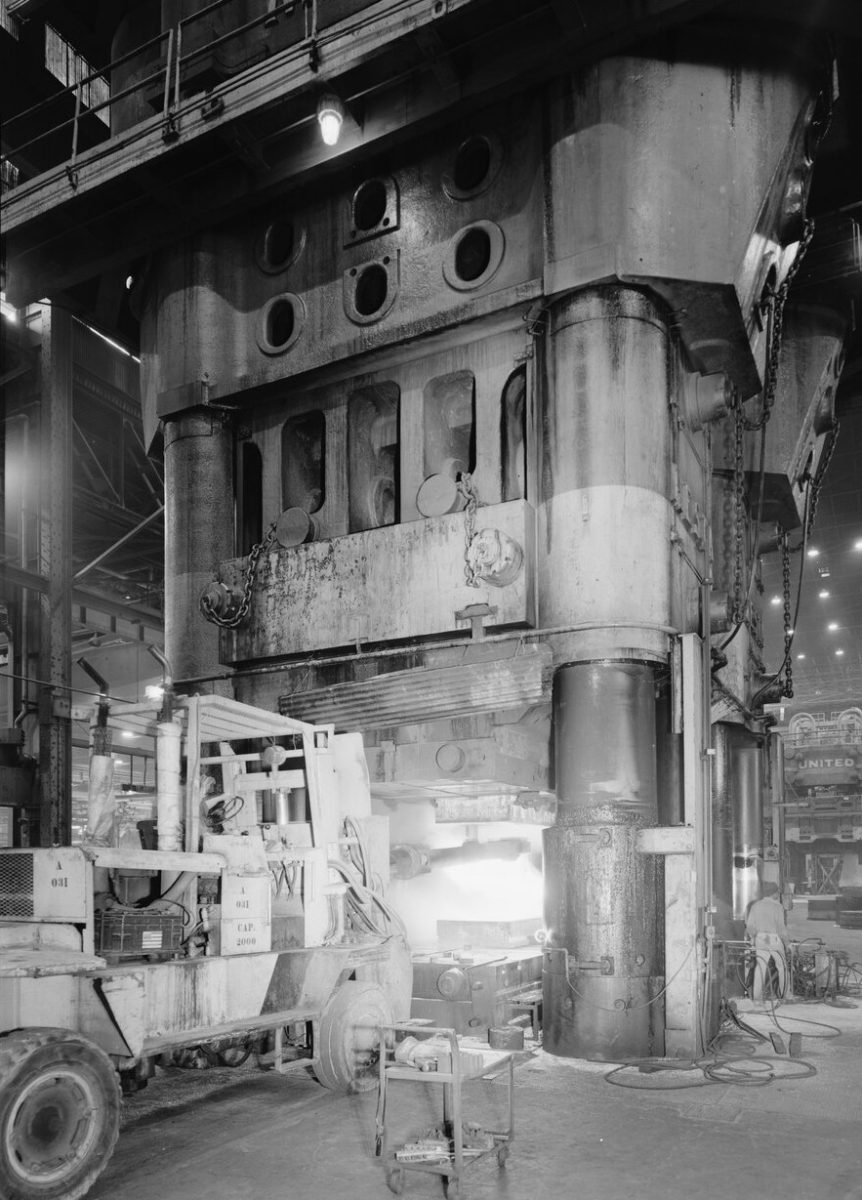
These machines were successful in reducing the amount of assembly required. But why and how is this important for the production process?
4. Operational and Structural Benefits of Heavy Forging
It is surprising to see how many benefits this revolution in space production has provided.
a. Reduced Lead Time
Decreasing the amount of small parts and forming them into a combined skeleton eliminates some of the assembly steps.
By decreasing the amount of seperate production and assemblies, this method profoundly decreases the lead time of the entire process. More occupied time means more labor cost, more machine running time, more electricity, and so on.
There is also another important term in industrial engineering related to time management: cycle time.
Cycle time for a product means how much time it takes for a factory to finish a unit-or, in continuous production, the time that passes between the completion of two consecutive products.
It can be said that this metric is more critical for high-volume products that have much shorter lead times than spacecraft.
Since spacecraft production is rare, complex, and time-consuming, its manufacturing cannot be based on a continuous flow that relies on standard cycle time calculations.
So in this case, the lead time is a significant game changer of spacecraft production system and the large forging machines greatly contribute to its optimization.
b. Weight Reduction
In the traditional way of manufacturing spacecraft, thousands of rivets, overlap joints, bolts, and other connection pieces had to be used [9].
However, the monolithic forged components shaped by heavy forging presses require fewer separate pieces and, therefore, fewer connector parts.
Eliminating these unnecessary fasteners makes the entire spacecraft significantly lighter. In space engineering, every kilogram of dead weight that can be removed pays back directly in payload capacity, which means the net weight that a spacecraft can safely carry [19].
This implies less fuel is required to operate the vehicle, allowing engineers to include more mission-critical parts.
c. Structural Integrity
In casting, materials are shaped directly by melting metals, which is why cast metals have lower strength for specific parts. In contrast, forging shapes the material using immense pressure.
This pressure aligns the crystalline grain structure of the metal along its contours, enabling the final part to be much more durable [14].
Because the high forging pressure makes the part physically stronger -for specific large parts in the space industry- these monolithic components also resist launch vibrations and metal fatigue better than assemblies.
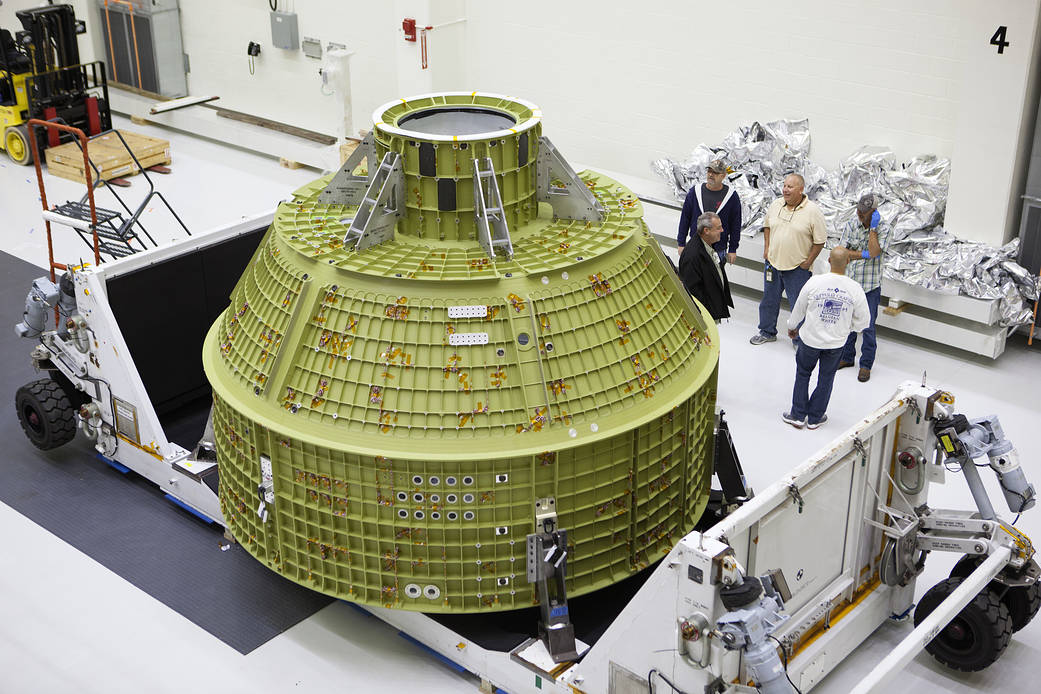
d. Material Efficiency and Scrap Reduction
Trying to obtain a large, critical structural part solely through machining from a solid metal block is not ideal due to the massive amount of scrap generated.
The materials used in the space industry are predictably expensive, and to achieve an optimal production system, scrap must be reduced to the lowest possible level.
Heavy forging presses do not cut material away. Instead, they form the metal into a near-net-shape using immense pressure. This ensures that the amount of scrap is minimized [4].
e. Repeatability and Quality
Closed-die forging presses enable the same precise shape to be obtained each time. As a result, the number of operator-caused problems is minimized. This is also because the number of parts that are seperately produced decrease by forging [15]. There is no need for precise, unnecessary labour requiring assembly.
5. Supply Chain and Operational Constraints
The advantages of these giants have been discussed, now the problematic aspects will be explained.
a. Single Source Restrictions and Geopolitical Aspects
As it can be predicted, engineering such a huge machine is not easy at all. The setup of the whole machine costs billions of dollars.
Heavy forging presses with capacities suitable for producing very large aerospace components are extremely limited worldwide [16].
Thinking that the first instances of these machines were produced approximately 70 years ago, it is obvious that there are unmanageable constraints during the engineering process of these machines.
This means that every space manufacturer that require very large aerospace forgings is dependent on a few commonly used machines, which can be referred to as a single-source restriction [17].
This results in delays, queues and production bottlenecks. But this consequence creates an interesting contradiction in terms of industrial engineering.
Previously, it was mentioned that implementing these machines into systems reduced lead time. However, here, it is contended that unwanted delays may occur due to the same machine implementation.
Here is the paradox of the industrial engineering analysis: A machine can improve the production process at the component level while simultaneously constraining the entire supply chain.
Other than that, the space industry is also strictly dependent on political and geographical stability and one of the reasons is the uniqueness of these machines. Any problem in international relations ends up causing the industry's supply chain to immediately get in trouble.
b. Cross Industry Competition
Another problem is that these machines are not only for space industry. [13] Commercial airliners (such as Boeing and Airbus), military fighter jets, power plant turbines and much more also wait in line for the very same presses.
c. Changeover Times
As mentioned above, these machines manufacture a wide variety of products that have vastly different attributes depending on the industry they serve. This means that whenever production switches from one product to another, significant tooling modifications must be made, resulting in significantly long changeover times for space industry [4].

d. Downtime Risk and Aging Infrastructure
The final problem with these machines is that they are so precious that if an unexpected downtime occurs, the entire chain will be immensely affected due to their uniqueness and irreplaceability.[13] Even though engineers work closely on maintaining them, most of these machines were built around the post-World War II era, meaning they are now over 70 years old. Just like any other mechanical system, they are open to deformation and metal fatigue. Due to zero redundancy, every single machine holds a critical role across the entire space industry.
Overall, it is seen that this revolutionary development in the space industry can be viewed from various aspects in relation to industrial engineering.
This leads to a realistic conclusion: every engineering breakthrough carries both advantageous and disadvantageous consequences.
These giant forging presses may have been a milestone for the space industry, yet today they stand as one of its biggest bottlenecks. And standard "Kaizen" suggestions might not be that simple this time... :)
References
[1] NASA. (Jan 2025). “The Space Shuttle” — nasa.gov
[2] Cambridge Dictionary. “forging.”, “bottleneck.” — dictionary.cambridge.org
[3] American Welding Society. (July 2001). “Standard Welding Terms and Definitions.”
[4] Groover, M. P. (2010) Fundamentals of Modern Manufacturing: Materials, Processes, and Systems. 4th ed.
[5] NASA. (1974) "Fracture Control Methods for Space Vehicles." — ntrs.nasa.gov
[6] Begley, S. (1977). “Seeking other worlds.” Newsweek, 90(7), 46-53.
[7] NASA. (Oct 2022). “65 Years Ago: Sputnik Ushers in the Space Age." — nasa.gov
[8] NASA. “The Dawn of the Space Age.” — nasa.gov
[9] Chertok, Boris. (June 2006). Rockets and People: Creating a Rocket Industry. National Aeronautics and Space Administration.
[10] Rettenmeier, M., et al. (2026). “Giga-casting as an enabler for new energy vehicle platforms: a preliminary analysis of laser-based post-processing.” Procedia CIRP.
[11] Williams, J.C., & Starke E.A. (2003). “Progress in structural materials for aerospace systems.” Acta Materialia.
[12] CIA. (Feb 1958). “Production and Use of Metalforming Machinery in the USSR.” — cia.gov
[13] ASME. (1981) “50,000 Ton Closed Die Forging Press.”
[14] Bhat, B. N. “Chapter 2: Aerospace Materials Characteristics.” NASA — ntrs.nasa.gov
[15] Narain, V., & Ray, S. (2020) "Comparative study of mechanical properties of cast and forged Al-3Mg-MnO2 and Al-8Mg-MnO2 composites." Heliyon. — doi.org
[16] Heffernan, T. (2012). "Iron Giant: One of America’s great machines comes back to life." The Atlantic.
[17] United States of America Department of Defense. (2018) "Assessing and Strengthening the Manufacturing and Defense Industrial Base and Supply Chain Resiliency of the United States." — media.defense.gov
[18] ETHW. "ASME-Landmark:Wyman-Gordon 50,000-Ton Hydraulic Forging Press." — ethw.org
[19] Jang, J. W. "Design of Launch Vehicle Flight Control Systems Using Vehicle Stability Analysis Tool." NASA. — ntrs.nasa.gov
Yazar Hakkında

Okul - Bölüm: İhsan Doğramacı Bilkent Üniversitesi - Endüstri Mühendisliği
MoEP Takımı: Astrojeoloji Araştırma Takımı (GEO-MARS)
Yorumlar1
Congratulations to you and your team on your first article. Examining the space sector through the lens of industrial engineering, heavy forging infrastructure, and single-source supply chain bottlenecks offers a critical perspective. Looking forward to the upcoming chapters of the series.


